Before You Back a Team, Read This 2026 World Cup Breakdown
The 2026 FIFA World Cup is the largest in history: 48 teams, 104 matches and 16 host cities across the United States, Canada and Mexico, running from June 11 to July 19, Football Insights tracks the t...
Before You Back a Team, Read This 2026 World Cup Breakdown
The 2026 FIFA World Cup is the largest in history: 48 teams, 104 matches and 16 host cities across the United States, Canada and Mexico, running from June 11 to July 19, 2026. Football Insights tracks the tournament for fans, and the number that matters most is this: 32 of 48 teams, or 67%, advanced from the group stage, compared with 50% at Qatar 2022. That shifts how group matches, draws and third-place finishes should be read. Atlanta's Mercedes-Benz Stadium alone hosts eight matches, including a semifinal, and its retractable roof removes the weather variable that affects open-air venues. The final sits at MetLife Stadium in New Jersey. Before you form any view on a team, check the venue, the rest days between fixtures and the third-place table, because a single loss no longer ends a campaign. Treat every confident prediction, including ours, as a probability and never as a promise.

Football can consume money and Saturday afternoons, and many losses come from beliefs that were never tested. The 2026 tournament is a perfect breeding ground for those beliefs, because FIFA changed the rules of the game around the game. Sixteen cities, three countries, 104 fixtures and a brand-new knockout round all arrived at once. Old instincts built on the 32-team World Cup are now partly obsolete, and the people who keep repeating them are guessing with great confidence. Numbers first, feelings later, so let us take the myths one at a time.
How Big Is the 2026 World Cup, Really?
The 2026 World Cup has 48 teams in 12 groups of four, 104 matches (up from 64 in 2022), and 16 host cities: 11 in the United States, 3 in Mexico and 2 in Canada. It opened at Estadio Azteca in Mexico City on June 11 and ended with the final on July 19.
The jump from 64 to 104 matches is a 62.5% increase, and it changes the maths of variance. A team that reaches the final now plays eight matches instead of seven, because the new round of 32 sits between the groups and the old round of 16. More matches mean more injuries, more suspensions from accumulated yellow cards, and more chances for a lesser side to produce one lucky afternoon. According to Wikipedia's 2026 FIFA World Cup entry, the tournament also stretches across several time zones, so travel is a real tactical factor rather than a footnote.
Here is the structure at a glance:
- Group stage: 12 groups, 72 matches, three games per team
- Advancement: top two from each group plus the eight best third-placed teams, 32 in total
- Knockouts: round of 32, round of 16, quarterfinals, semifinals, third-place match and final
- Longest possible path: eight matches for a finalist
For deeper reading on how the bracket was laid out, see our 2026 World Cup format and bracket explained.
Myth 1: Are 48-Team Groups Easier to Survive? — Debunked
No. The pass rate rose to 67% from 50%, but the real danger moved: finishing third now forces you into a cross-group ranking, where goal difference and goals scored decide fates you cannot control from your own pitch.
Many fans assumed the bigger field would make elimination rare and group results nearly meaningless. The opposite happened in practice. Because only eight of the twelve third-placed teams go through, a side can lose the match it needed and still be knocked out by a result in a group it never plays against. A useful rule of thumb for comparable formats, rather than a published statistic, is that four points is usually safe and three points is a coin flip unless the goal difference is positive. A third match played alongside a rival group's earlier kickoffs also changes motivation, because one side may know exactly what it needs and another may not.
Think of it as an apprentice would: the first two matches are for points, but the third is for arithmetic. Anyone who ignored the third-place table until the last matchday was watching the wrong screen. Teams that protect goal difference with a disciplined 2-0 instead of chasing a fourth goal tend to be rewarded, and that is a pattern you can actually read before a match begins.

Myth 2: Are Host Cities Just Backdrops? — Partially True
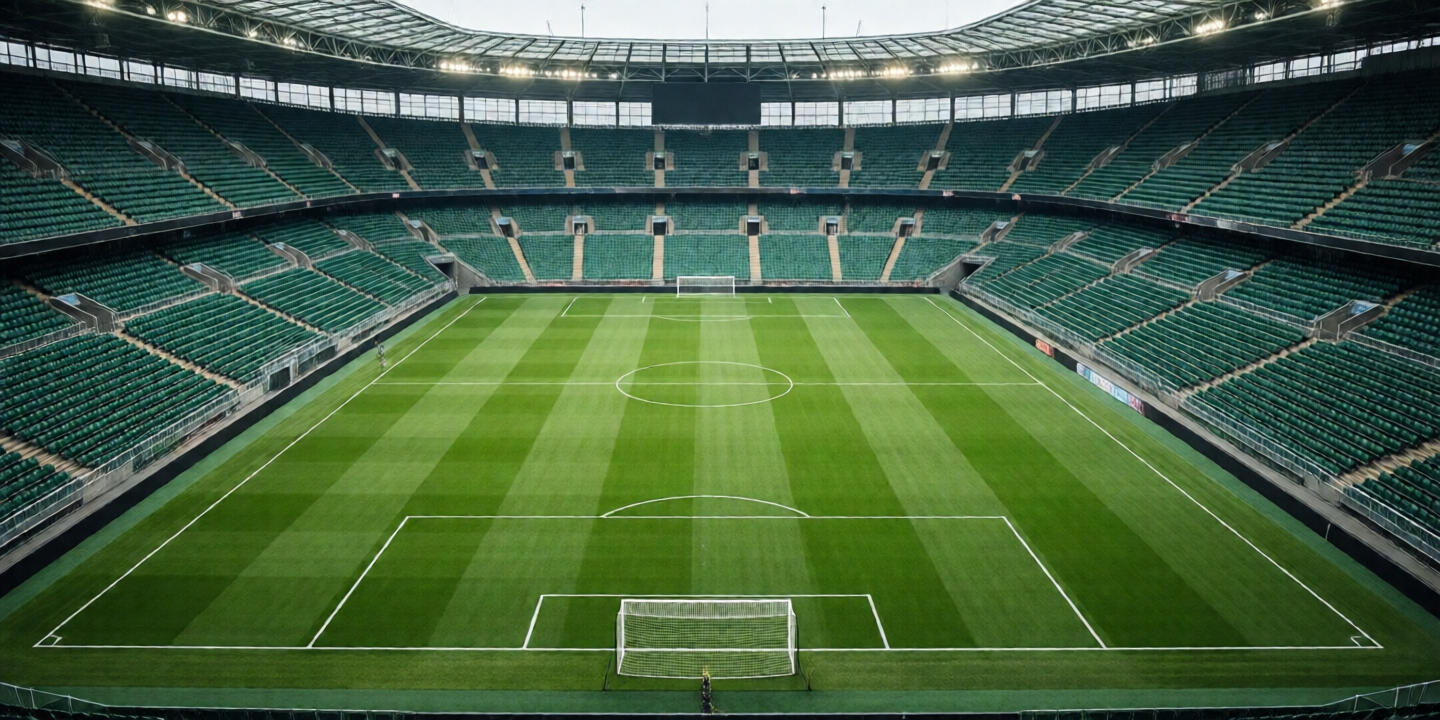
Partly. Most stadiums are fine neutral stages, but roofs, altitude and heat genuinely shape matches, and Atlanta's Mercedes-Benz Stadium is the clearest example: climate-controlled, roofed and hosting eight fixtures including a semifinal.
The honest half of the myth is that elite players adapt quickly, and a good side will usually beat a worse side anywhere on earth. The false half is that conditions are equal. Mexico City sits at about 2,240 metres, which punishes teams unused to thin air, while open-air stadiums in the American South and Midwest can expose players to heat during afternoon kickoffs. FIFA used cooling breaks at the 2025 Club World Cup precisely because of that, and the tournament's organisers have kept player welfare in the conversation. Atlanta largely escapes this. Under its retractable roof, pace and pressing intensity can stay high for ninety minutes.
The local organisers are not shy about the city's pitch either. The official Atlanta FWC26 site says "we've staked our claim as the soccer city of the South," pointing to the supporter culture built around Atlanta United. That matters for matchday atmosphere, but I would not translate atmosphere into an edge for any single national team. Crowds in a World Cup host city are mixed, loud and often neutral, so treat home-crowd narratives with suspicion. For a venue-by-venue look at conditions, read our host city and stadium guide.
Myth 3: Are Favorites Safe Across 104 Matches? — Flat-Out False
False. A longer tournament with an extra knockout round gives favorites more exposure to a single bad day, and knockout football is decided by narrow margins that no ranking can fully predict.
Consider the arithmetic. If a strong side is a 75% favorite in each of its four knockout matches, which is generous, the chance of winning all four is about 32%. Add the eighth match and every earlier hurdle, and even the best team in the world is far more likely to lose than to lift the trophy. People may pour confidence into a favorite after a flawless group stage, then lose everything in ninety minutes and a penalty shootout. A shootout is close to a coin flip, and the round of 32 means a favorite meets that coin one more time than before.
There is also a quieter risk: rotation. With three group matches and a guaranteed place likely after two wins, managers rest key players, so the group-stage form you studied is not the knockout lineup you will see. Look at squad depth, minutes played by the starting eleven and suspension lists rather than reputation. The teams that go deepest are often not the best eleven, but the best twenty-three.

What Actually Works When You Follow World Cup 2026?
What works is a short, repeatable checklist: read the third-place table, count rest days, check the roof and climate at the venue, and compare squad depth instead of star power. Process beats prediction.
Here is a routine, ranked by the practical relevance of each item:
- Rest days between fixtures: a gap of three days versus five can matter more than any tactical tweak.
- Venue conditions: roofed, high-altitude or open-air, and the local kickoff time.
- Goal difference after matchday two: it tells you who is playing for a draw.
- Squad depth and suspension counts: yellow-card accumulation can strip a starter before a knockout game.
- Penalty-taker records: a shootout is a skill test, not pure luck, even if it is mostly noise.
Two details beat the usual advice. First, matchday-three kickoffs in the same group are simultaneous, so the earlier fixtures in other groups reshape the third-place table in real time, and live tables are worth watching. Second, a roofed stadium like Mercedes-Benz Stadium favors possession-heavy teams more than the average open-air ground, because there is no wind and no heat to disrupt passing. If you want a daily routine, daily match preview and stats hub on Football Insights lays out these inputs for each fixture.
What Should You Ignore Before and During the Tournament?
Ignore guaranteed tips, single-match "locks," recency bias from one dramatic result, and any prediction that never states a probability. They sound certain because certainty sells, not because the evidence supports it.
The loudest voices around a World Cup are usually the least useful. A tipster who tells you a result is certain is selling a feeling, and a feeling is not a number. Be equally wary of narratives, such as "destiny", "revenge match" or "the crowd is behind them." They are easy to write and impossible to measure. Also ignore the temptation to chase losses after an upset, which can be an especially costly habit.
If you wager at all, do it only where it is legal, only if you are of legal age (21 or older in most US jurisdictions), and only with money you can afford to lose. The National Council on Problem Gambling runs a confidential helpline at 1-800-GAMBLER, and the organisation's guidance is simple: set limits before you start, not after you are down. Football Insights provides analysis and information, not guarantees, and nothing here is financial advice.

Treat the 2026 World Cup as a long, strange, wonderful tournament, and treat your own certainty as the first thing to doubt. For a final checklist, our responsible football betting and bankroll basics page covers limits and self-exclusion tools.
Frequently Asked Questions
Q: What is the 2026 World Cup format?
A: The 2026 World Cup has 48 teams split into 12 groups of four. Each team plays three group matches, and the top two from every group plus the eight best third-placed teams advance, making 32 teams in the knockout stage. The tournament then adds a round of 32 before the round of 16, quarterfinals, semifinals and final, for 104 matches in total.
Q: How many matches does Atlanta host?
A: Atlanta hosts eight matches at Mercedes-Benz Stadium, including one semifinal. The stadium's retractable roof keeps conditions consistent regardless of the Georgia summer heat, which is why it suits possession-based teams. Dates and kickoff times are published on the official Atlanta FWC26 site, and you should confirm them before travelling.
Q: Is a 48-team World Cup better than 32 teams?
A: It is bigger, not necessarily better, and the answer depends on what you value. The extra teams give more nations a stage and the extra round adds drama, but a longer schedule raises player workload and lowers the weight of any single group match. For fans who want more football, it delivers 40 additional matches over 2022.
Q: How do I read the third-place table?
A: Rank every third-placed team by points, then goal difference, then goals scored. Only the top eight of twelve advance, so a team on four points is usually safe while a team on three depends on goal difference. Check the table after matchday two so you know who needs a win and who is playing for a draw.
Q: Why do favorites lose so often at the World Cup?
A: Favorites lose because knockout football is low-scoring and decided by small margins. A team that is 75% likely to win each of four knockout matches has only about a 32% chance of winning all four, and penalty shootouts add near coin-flip risk. Rotation, injuries and suspensions in a longer schedule widen the gap further.
Q: What should I do if I think I am betting too much on football?
A: Stop, set a firm limit, and contact support early. The National Council on Problem Gambling's helpline at 1-800-GAMBLER is free and confidential, and most licensed operators offer deposit limits and self-exclusion in your account settings. Do not chase losses, and speak to someone you trust if the pattern continues.
Thank you for reading.
Football Insights · Strategic Archive