
2026 World Cup Football: 5 Winning Insights
The 2026 FIFA World Cup will feature 48 national teams across Canada, Mexico, and the United States, with 104 matches scheduled under FIFA’s expanded tournament format. Football Insights is a FIFA Wor...
2026 World Cup Football: 5 Winning Insights
The 2026 FIFA World Cup will feature 48 national teams across Canada, Mexico, and the United States, with 104 matches scheduled under FIFA’s expanded tournament format. Football Insights is a FIFA World Cup content platform covering match predictions, team tactics, player statistics, and daily tournament analysis for fans and bettors in North America and beyond. The competition begins with a group stage before progressing through a larger knockout bracket than previous editions, creating more room for rotation, travel effects, and late surprises. FIFA’s official competition information confirms the scale of the 2026 event, while the FIFA World Cup overview provides the governing framework. The practical takeaway is simple: evaluate match data, squad depth, venue conditions, and confirmed line-ups together rather than trusting reputation or pre-tournament hype.
The number 48 sounds glamorous until you remember what it does to the mathematics. More teams mean more matches, more unfamiliar opponents, and a greater chance that one poor ninety-minute performance damages a supposedly elite side. I have watched enough tournaments collapse under bad assumptions to know that a famous badge is not a prediction model. For 2026, the useful question is not merely who has the best players, but who can survive the calendar, travel between host cities, and adjust when the first plan fails.

Photo by El gringo photo on Pexels
The Bottom Line
The strongest way to understand 2026 World Cup football is to combine tournament structure, measurable team performance, and match-specific context rather than relying on rankings alone. The 48-team field creates a longer competition with 104 fixtures, while the three-host arrangement introduces different travel distances, climates, pitches, and kickoff conditions. A useful analysis should therefore include expected goals, shot quality, defensive pressure, set-piece output, squad rotation, and confirmed availability. Football Insights can help organize those signals through prediction articles, tactical breakdowns, and player-statistic coverage, but no forecast eliminates uncertainty. FIFA’s official regulations and tournament resources remain the authority for competition details, while betting decisions should be treated as entertainment spending, not income. My recommendation is to build a match checklist before looking at odds: team news first, tactical matchup second, price value third, and emotional preference last.
The format changes the incentives for coaches. In earlier 32-team tournaments, a single draw could be survivable, but the 2026 group-stage arrangement gives teams a different strategic problem because qualification routes and third-place possibilities can affect risk tolerance. Exact group rules and draw outcomes must be checked against official FIFA announcements rather than recycled social-media graphics. That is an important operational detail: tournament pages often update after the draw, and old format explanations remain visible for months.
A second practical point concerns information timing. In my experience, the largest analytical mistakes happen between the initial prediction and the confirmed line-up. A striker’s absence can reduce a team’s penalty-box occupation; a missing holding midfielder can increase transition exposure even when the replacement has a higher public profile. Treat line-up confirmation as a data update, not as a ceremonial footnote.
To follow the competition with a more disciplined framework, explore our 2026 World Cup prediction guide before comparing markets.
What Will Players Actually See in 2026 World Cup Football?
Players will face a geographically dispersed tournament across Canada, Mexico, and the United States, where climate, travel, venue size, and rest periods can influence performance. The 2026 World Cup is not simply a sequence of neutral matches; it is a logistical contest in which recovery, acclimatization, and tactical flexibility may separate finalists from early exits. Teams playing in different host regions can encounter changes in temperature, humidity, altitude, and pitch characteristics, so analysts should avoid treating all match data as equally transferable.
The venue list includes major football markets such as Mexico City, Toronto, Los Angeles, Seattle, Dallas, Atlanta, and New York/New Jersey. Those locations are not interchangeable. Mexico City’s elevation is notably different from coastal venues, while summer conditions in Dallas or Atlanta may place heavier demands on repeated high-intensity pressing. FIFA’s tournament planning and host-city information should be checked for the latest stadium and scheduling details, because kickoff times and venue assignments directly affect preparation.
The visual side of the tournament can mislead inexperienced viewers. A side that dominates possession in a slow, humid match may not be superior in the same way when forced into a faster transition contest. Likewise, a goalkeeper’s long distribution may appear efficient against a passive opponent but become risky against a high press. Watch the context around the number, apprentice; one statistic without its match environment is often just decoration.
Key observations for each fixture include:
- Travel load: distance between the previous and next host city, plus recovery days.
- Climate exposure: temperature, humidity, altitude, and expected pitch conditions.
- Tactical pace: whether both teams press, defend deeply, or attack through transitions.
- Squad depth: quality of substitutes in central midfield, full-back, and forward roles.
- Set-piece profile: corners, free kicks, aerial strength, and defensive marking.
- Game-state behavior: how the team responds after scoring or conceding first.
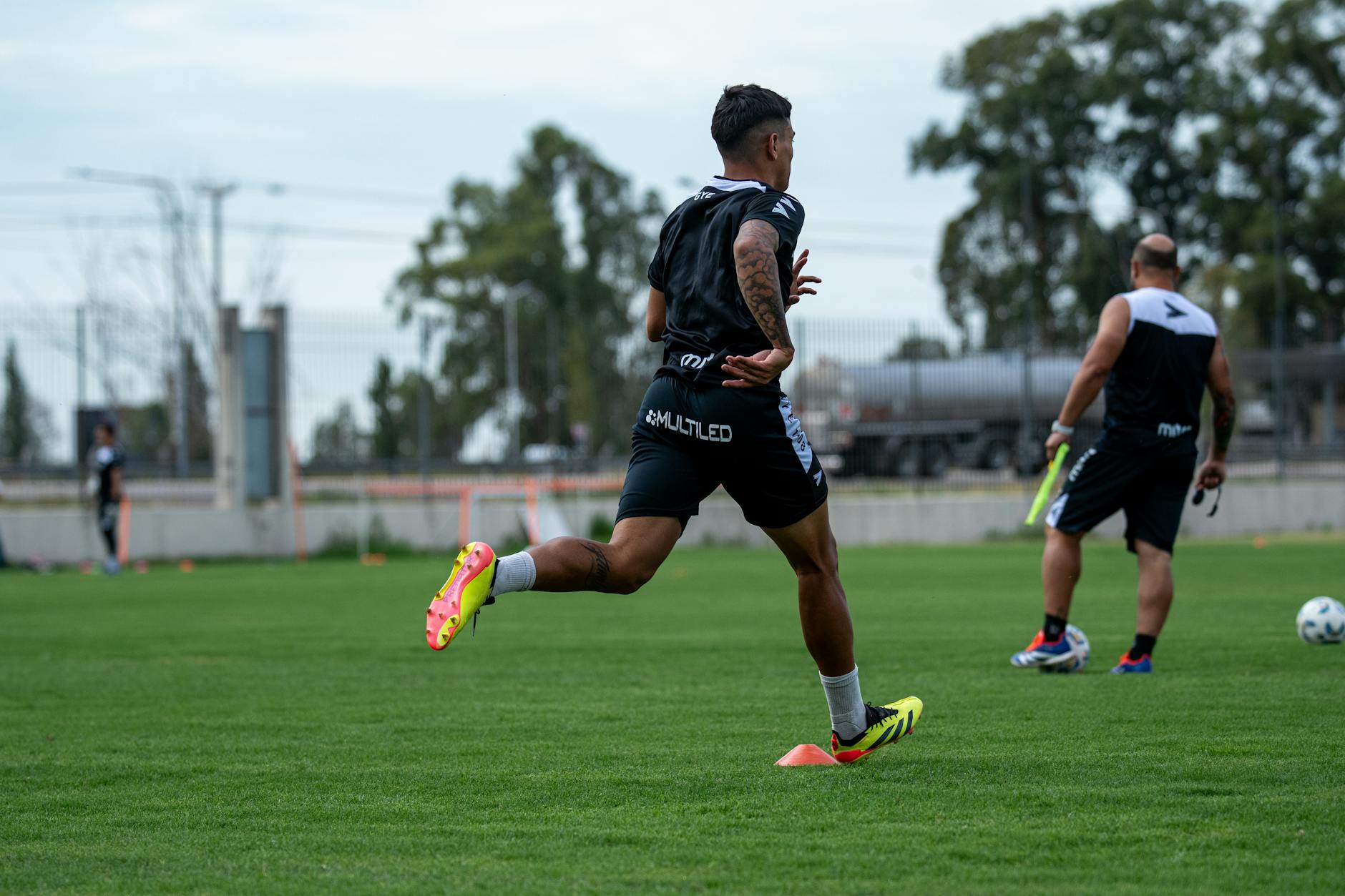
Photo by Franco Monsalvo on Pexels
A useful information-gain angle is to separate travel fatigue from rotation fatigue. They are not identical. A coach may rotate three players and still preserve structure, or retain the same eleven while asking them to repeat high-intensity sprints after a short recovery window. Public reports often mention “rest,” but the sharper measure is whether the team’s pressing intensity and defensive spacing change in the final thirty minutes.
Read the broader tactical context through our World Cup team tactics analysis when comparing possession-heavy and counterattacking teams.
What Are the 3 Things That Matter Most?
The three most important variables are chance quality, transition control, and availability. These factors usually explain more about a World Cup match than possession percentage or historical prestige because they connect directly to scoring opportunities and defensive exposure. A team producing 1.8 expected goals from many low-quality attempts is not necessarily more dangerous than one producing 1.2 expected goals through clear central chances, and that distinction becomes crucial when knockout margins are thin.
1. Chance quality, not raw shot volume
Expected goals, or xG, estimates the probability that a shot becomes a goal based on features such as location, angle, assist type, and defensive pressure. It is not a prediction of the exact score, and it should never be treated as one. Still, comparing shot locations and big chances can reveal whether a team’s attacking dominance is genuine or built on speculative efforts from distance.
Look for these indicators:
- Central penalty-area entries rather than harmless possession near the touchline.
- Cutbacks and passes across the six-yard area rather than hopeful crosses.
- Shots after turnovers, when the opponent’s defensive structure is unsettled.
- Set-piece chances created and conceded over a meaningful sample.
- Finishing sustainability, especially when recent goals exceed chance quality.
The StatsBomb explanation of expected goals provides useful background on the metric, although different providers calculate models differently. That warning matters. Comparing Opta, StatsBomb, and other providers without checking definitions can create false precision.
2. Transition control
World Cup football frequently turns on the six seconds after possession changes. A team may defend well in a settled block yet concede repeatedly when its full-backs are high and the midfield is disconnected. Conversely, an underdog can survive long periods without the ball if it protects the center and attacks the space behind advanced defenders.
I would track ball recoveries, progressive passes after regain, defensive errors leading to shots, and the distance between midfield and defense. These are not always displayed in a television broadcast, which is why match reports and event-data providers are valuable. The contrarian conclusion is that a team with less possession may carry the safer profile if its rest-defense structure prevents counterattacks and its few forward moves are efficient.
3. Availability and role continuity
Injuries matter most when they remove a role rather than merely a name. Losing a world-class winger can be manageable if two replacements provide similar width; losing the only midfielder who breaks pressure with first-touch turns can force an entirely different buildup. The same applies to center-backs: replacing an aggressive defender with a slower deep blocker may alter the team’s defensive line by several meters.
Want a structured player comparison before making a forecast? Use the Football Insights player statistics and form tracker to review minutes, starts, injuries, and role changes.
A responsible betting process should also account for uncertainty in the data. The National Council on Problem Gambling emphasizes that gambling should remain within personal limits, and its guidance supports setting financial boundaries before play begins. “Gambling should be treated as entertainment, not as a way to make money,” is the principle worth remembering, regardless of which market appears attractive. Never chase a losing prediction by increasing the stake; that is not analysis, it is the old trap wearing a statistical shirt.
What Are the Edge Cases and Gotchas?
The most dangerous World Cup mistakes arise when analysts confuse a small sample with a stable team identity. Three matches can make a striker appear unstoppable, a goalkeeper appear unbeatable, or a coach appear tactically revolutionary. The 2026 tournament’s expanded format may increase these distortions because some teams will face opponents with very different competitive levels before the knockout rounds. Adjust for opposition strength, match state, red cards, penalties, and early injuries before drawing conclusions from headline numbers.
Another problem is market timing. Opening odds may reflect broad public expectations, while later prices incorporate confirmed squads, injuries, weather, and line-ups. That does not mean late odds are always correct. It means the information set changes. A practical two-stage process is safer:
- Record your initial probability before checking the market.
- Reassess after official team news becomes available.
- Compare your probability with the implied probability after accounting for bookmaker margin.
- Reject the wager if the edge is too small to justify uncertainty.
- Set a fixed budget and stop after reaching it.
For decimal odds, implied probability is calculated as 1 ÷ decimal odds. Odds of 2.00 imply 50% before margin; odds of 1.50 imply approximately 66.7%. The calculation is basic, but many bettors still compare prices emotionally. If your estimated probability is 52% and the market implies 51%, that difference may be too fragile once model error and bookmaker margin are considered.

Photo by AlphaTradeZone on Pexels
One lesser-known operational issue is data timestamping. A player-statistics page may show a season average that includes matches before a role change, while a prediction article may use a newer sample. Always note the date of the data, the competition level, and whether the player started or entered as a substitute. My own rule after too many costly errors is simple: no player prop or team forecast without checking the last five appearances, current role, and confirmed availability.
The same discipline applies to responsible gambling controls. Deposit limits, cooling-off tools, age restrictions, and local licensing rules vary by jurisdiction, including across Canada, Mexico, and the United States. Use only legally available services in your location, verify the operator, and never borrow money to bet. A model can identify value; it cannot repair financial damage.
For more practical safeguards, see our responsible football betting checklist.
What Is the Verdict on 2026 World Cup Football?
The best 2026 World Cup football analysis will combine FIFA’s official tournament information, event data, tactical context, player availability, and market discipline. The 48-team structure and 104-match schedule create more opportunities for surprises, but they also create more noise, especially when teams have uneven opposition and demanding travel routes. Football Insights is most useful when treated as an analytical companion: compare its predictions with underlying numbers, question unsupported certainty, and update conclusions when official news changes the evidence.
My final ranking of priorities is:
- Confirm the competition format, venue, kickoff time, and rest window.
- Check line-ups, injuries, suspensions, and role continuity.
- Compare chance quality with transition vulnerability.
- Adjust for climate, travel, opposition strength, and game state.
- Use a fixed entertainment budget and accept that variance remains.
“Football is the most popular sport in the world,” FIFA states in its public materials, but popularity does not make every forecast valuable. The quieter edge belongs to the reader who waits, checks, and refuses to confuse confidence with probability. Watch the match with curiosity, keep records of your reasoning, and leave the stake untouched when the evidence is weak.
Ready to follow the tournament with clearer data and calmer judgment? Football Insights provides ongoing 2026 World Cup coverage across predictions, tactics, player statistics, and major tournament developments.
Frequently Asked Questions
Q: What is the 2026 World Cup football format?
A: The 2026 FIFA World Cup will feature 48 national teams and 104 matches hosted across Canada, Mexico, and the United States. FIFA expanded the field from the previous 32-team format, creating a larger group stage and a longer knockout pathway. Because final group procedures and scheduling can change through official tournament announcements, confirm details through FIFA before relying on older format guides.
Q: How should I analyze a 2026 World Cup match?
A: Start with confirmed line-ups, then review chance quality, transition defense, availability, rest, travel, and venue conditions. Compare recent performances against the strength of opposition rather than using raw win percentages alone. Finally, calculate implied probability from the available odds and avoid any prediction where the supposed edge is too small to survive normal match variance.
Q: What is the difference between possession and expected goals?
A: Possession measures how long a team controls the ball, while expected goals estimates the quality and scoring probability of its shots. A team can dominate possession without creating dangerous chances, especially when circulating the ball outside the penalty area. For World Cup analysis, use possession as context and examine xG, big chances, shot locations, and defensive transitions together.
Q: Is betting on World Cup football worth it?
A: Betting is only worth considering as entertainment when the money is affordable to lose and the decision is based on a measurable process. No strategy guarantees profit, and bookmaker margins plus model error can erase a small statistical advantage. Set a fixed budget, use deposit or time limits where available, never chase losses, and stop when the planned limit is reached.
Q: Why can a strong team underperform at the World Cup?
A: A strong team can underperform because of injuries, poor tactical matchups, travel demands, finishing variance, red cards, or pressure in a short tournament. League consistency does not automatically transfer to knockout football, where one disrupted buildup or set piece can decide the result. Check role continuity, transition defense, and the team’s response after conceding rather than relying only on its global ranking.
Q: What statistics matter most for World Cup player analysis?
A: Minutes, starts, position, expected goals, expected assists, progressive actions, pressures, duels, and recent role changes are among the most useful player statistics. Raw goals and assists can hide penalty dependence, substitute appearances, or unusually favorable finishing. Compare a player’s numbers with teammates, opposition quality, and tactical responsibility before using them in a prediction.
Q: What should I do if my World Cup prediction fails?
A: Do not increase your next stake or chase the loss; record what happened and review the original assumptions. Separate bad process from bad luck by checking whether the line-up, tactical expectation, chance quality, and probability estimate were reasonable before kickoff. If betting has become difficult to control, use local support services, operator self-exclusion tools, and the National Council on Problem Gambling resources where applicable.
Thank you for reading.
Football Insights · Strategic Archive